CashPlay • Shipped 2025
Role
Product Designer
Timeline
September – November 2024
SKILLS
Product Design
Gamification Systems
Experimentation & Metrics
Overview
CashPlay is a reward-based gaming platform where users play partner games and earn coins that convert into real money.
At a high level, the product feels simple:
When I started working closely on the core user journey, two structural issues stood out:
Rewards felt like tasks instead of incentives.
Permission requests were overwhelming users early in the journey.
This case study focuses on how we identified these friction points and redesigned the system to feel lighter, clearer, and more rewarding.
Problem 1
Milestone-Based Rewards Created Anxiety
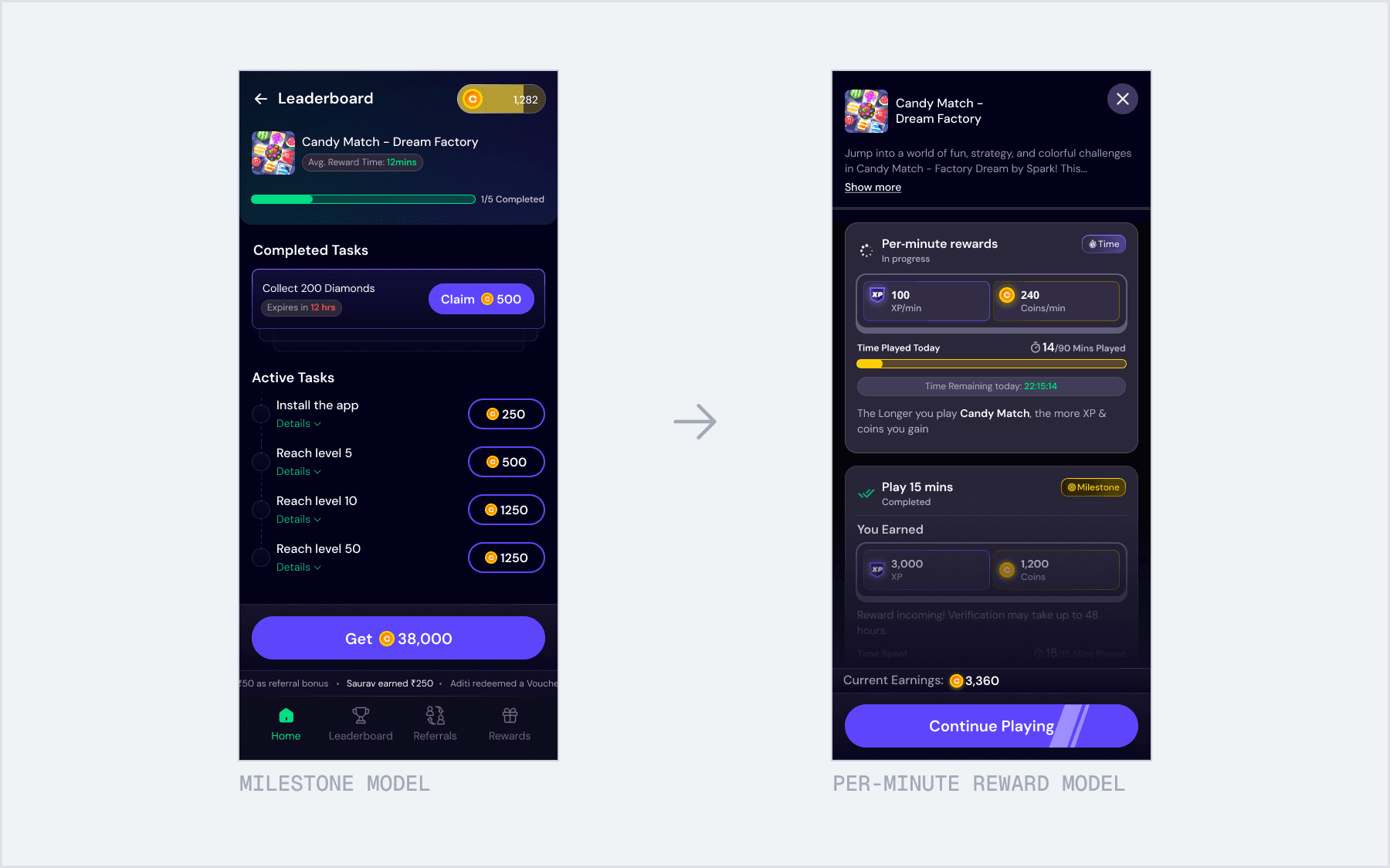
Originally, CashPlay followed a traditional milestone-based model.
Users would see structured goals:
Reach Level 5 → Earn coins
Reach Level 10 → Earn more
Reach Level 15 → Earn more
It looked motivating. It felt organized.
But through user behavior and support patterns, we started noticing something subtle.
Users weren’t enjoying the games - they were monitoring progress.
Issues: The reward gap was too large. Users had to invest time without getting feedback early enough.
That delay created doubt. And doubt reduces engagement in incentive-based systems.
Solution 1
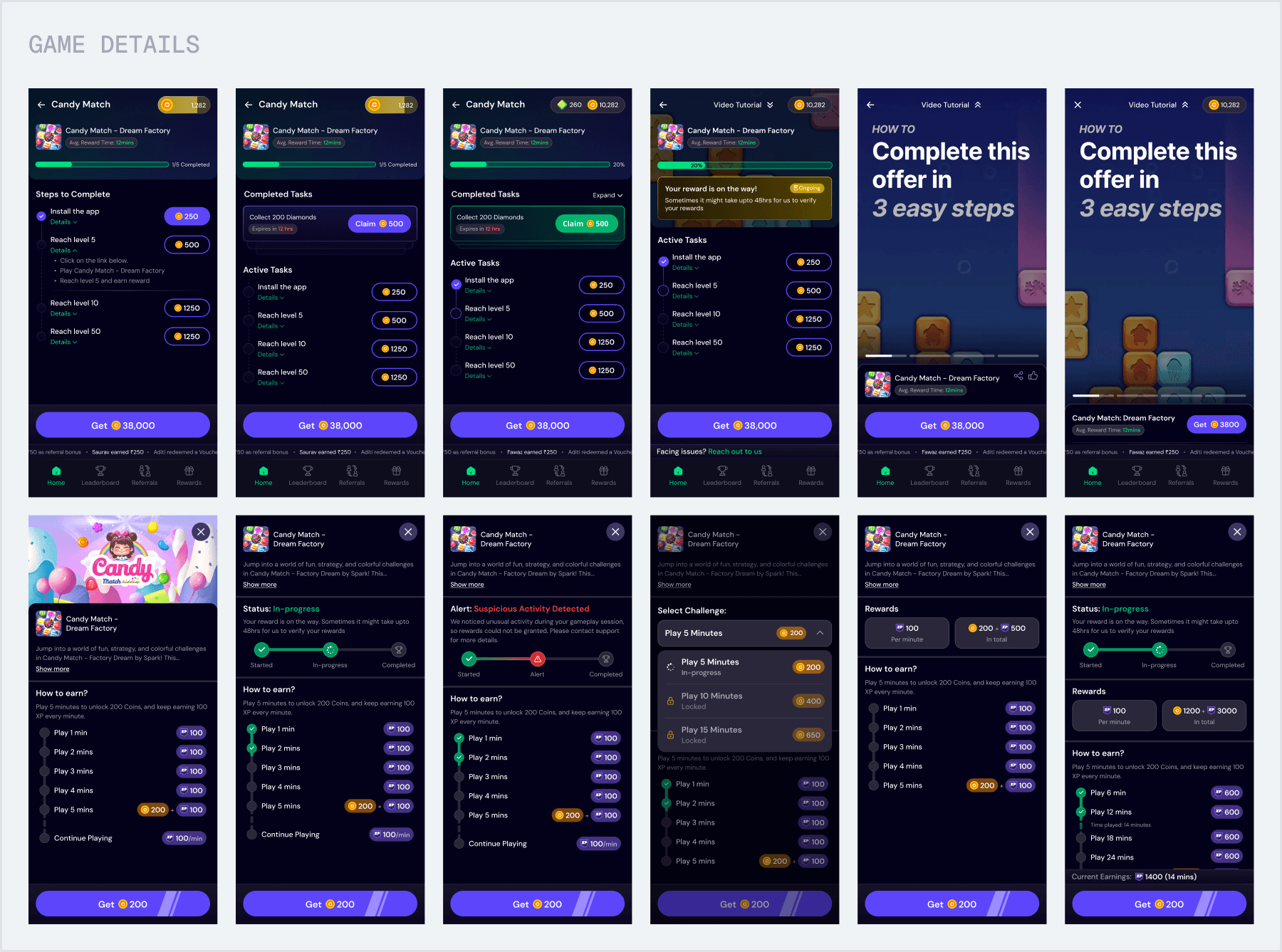
Shifting to a Per-Minute Earning Model
Instead of tying rewards to specific in-game levels, we introduced a per-minute earning system. Users now earned coins based on active playtime.
The mental model shifted from:
“I need to complete this level” → “I just need to play.”
Problem 2
Permission Overload During Onboarding
CashPlay requires multiple Android permissions to function accurately - including usage access and overlay permissions for tracking.
Originally, all permissions were requested upfront during onboarding.
From a technical standpoint, it was efficient.
From a human standpoint, it felt overwhelming.
Users would install the app and immediately encounter a sequence of system dialogs - before seeing value.
Issues: Completion rate after onboarding permissions was around 63%. Over one-third of users dropped before starting an offer. The issue wasn’t the permissions themselves. It was the timing.
Solution 2
Contextual Permission Strategy
We didn’t remove permissions. We reframed them.
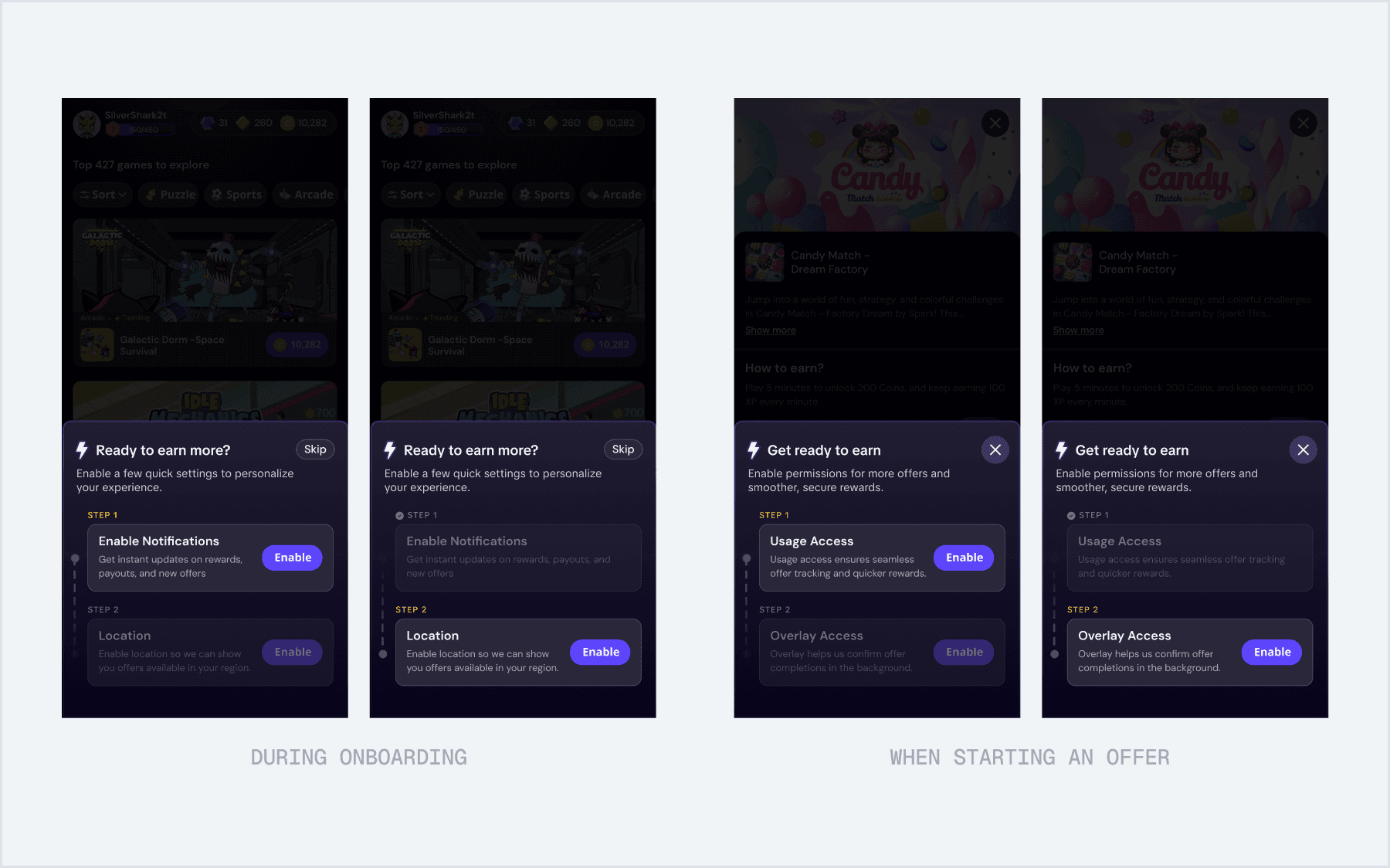
We split them into two contextual phases:
Onboarding (Skippable): Notifications & Location
At Offer Start: Usage & Overlay
Now, when users saw a sensitive permission, it was tied to action:
“You’re starting an offer. We need this to track your rewards.”
That small shift made the request feel purposeful rather than suspicious.
Impact
43% → 61%
Offer Start Rate
63% → 84%
Permission Completion
29% → 41%
Day 1 Retention
Design Decisions
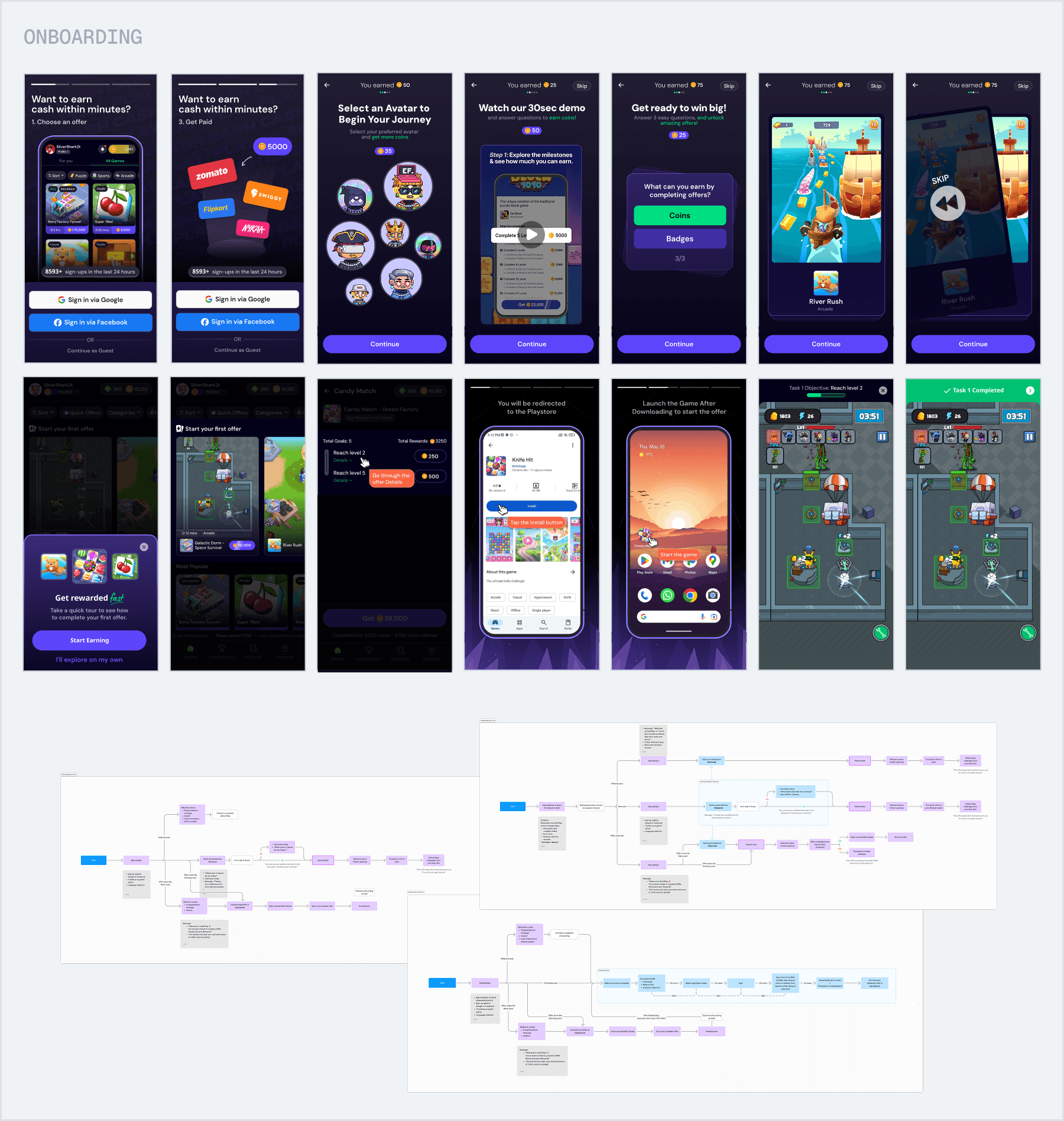
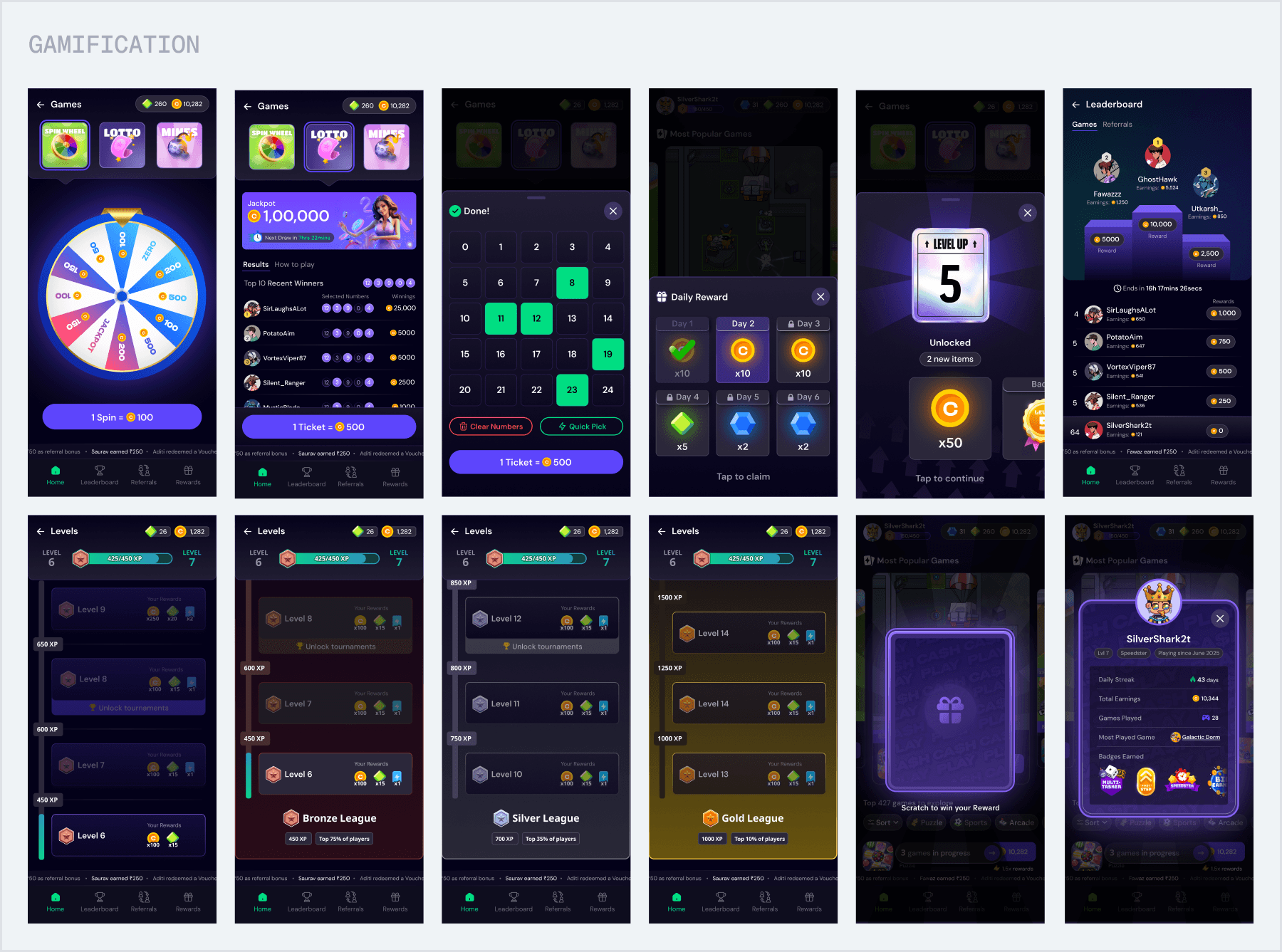
Through prototyping, analytics, and iteration, we explored how reward mechanics, tracking visibility, and onboarding states could work together seamlessly within CashPlay.
The following screens highlight alternate flows, UI experiments, and structural planning that informed the final product direction.
Reflection
When we first looked at the data, it would have been easy to assume we needed stronger gamification.
But the problem wasn’t motivation. It was mental load. Users weren’t disengaging because rewards were small. They were disengaging because earning felt uncertain.
That shifted how I approached the redesign.
CashPlay grew not because we changed the reward math, but because we changed how earning felt.